Almost every parent who brings their child to martial arts mentions self-defense as one of their goals. And almost every parent has a slightly different, and often inaccurate, picture of what self-defense actually means for children.
This guide is about what practical self-defense actually looks like for children at different ages — and why getting the order right matters more than any specific technique.
The Correct Order of Self-Defense Skills
Effective self-defense training for children follows a hierarchy. Skipping ahead — jumping straight to physical techniques — produces children who are confident about the wrong things. The correct order:
- Awareness — knowing when something is wrong before it escalates
- Verbal skills — the ability to firmly communicate boundary violations
- De-escalation — understanding how to defuse situations before they become physical
- Physical techniques — only when all of the above have failed
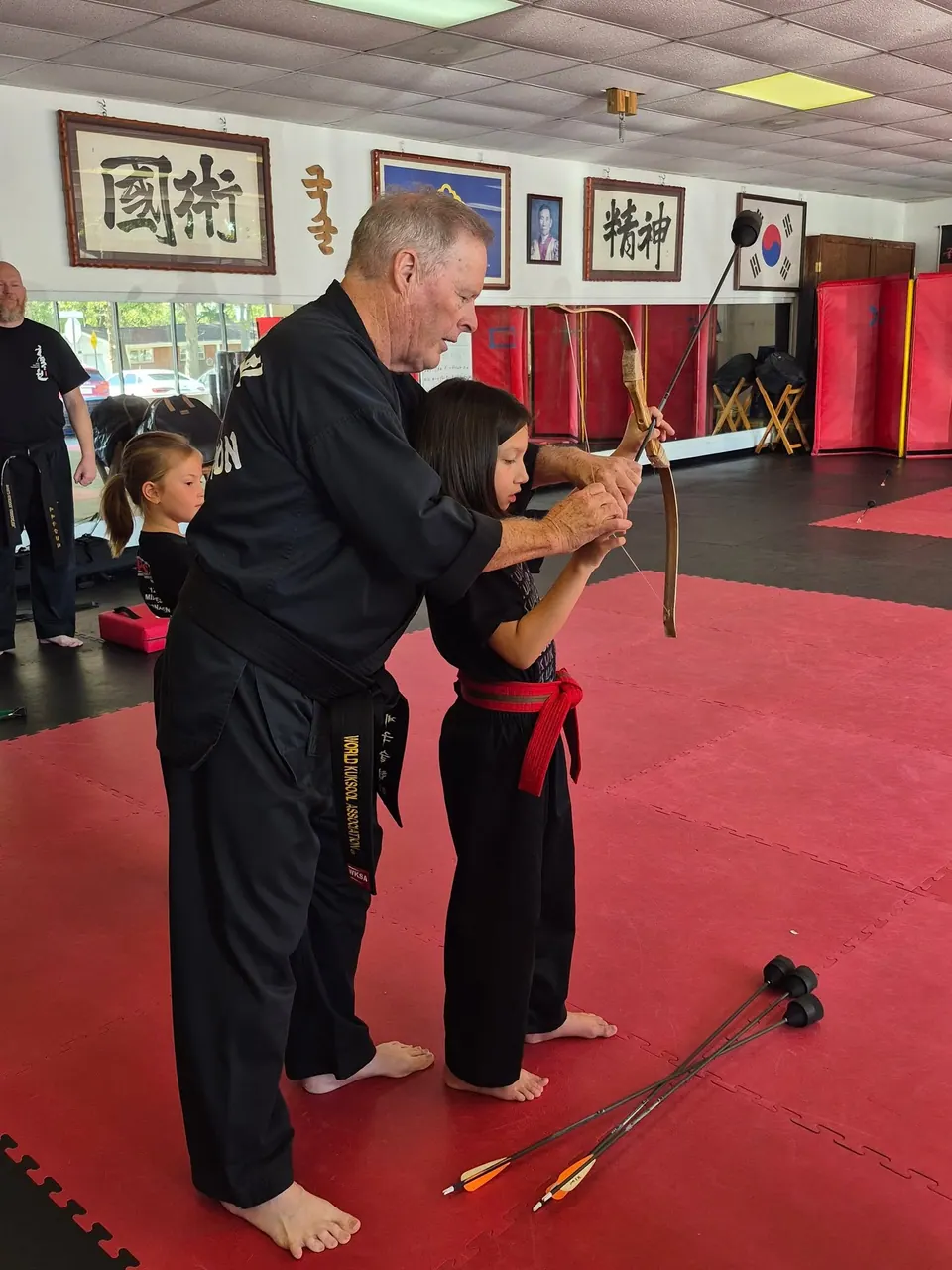
Most martial arts schools teach physical techniques from day one. We teach awareness from day one, and introduce physical techniques in the context of the complete framework — because a child who knows how to do a back kick but doesn't recognize a threatening situation before it escalates is not actually safer.
Age-Appropriate Expectations
Ages 4–6 (Little Tigers)
At this age, "self-defense" means: knowing who safe adults are, knowing how to say "no" with their voice and body, understanding that their body belongs to them, and basic physical awareness (staying with a trusted adult, recognizing when something feels wrong).
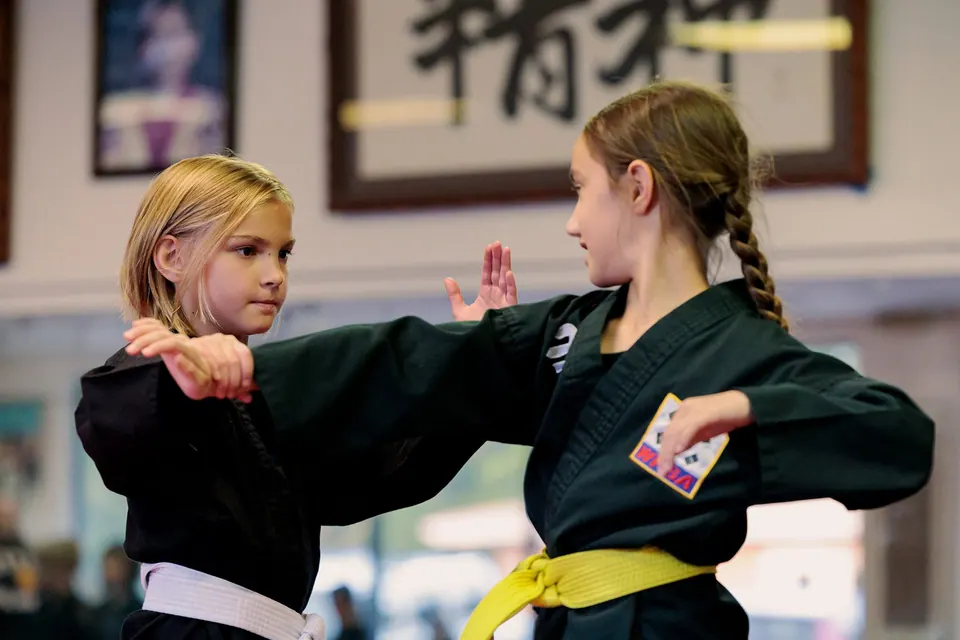
Physical techniques at this age are simplified, playful, and focused on basic blocking and creating distance — not complex combative sequences.
Ages 7–12
At this age, children can understand more nuanced situations: what to do if someone they know (not just a stranger) creates an unsafe situation, how to navigate bullying scenarios verbally before they become physical, and how to communicate with trusted adults about unsafe experiences.
Physical skills are introduced more formally, with emphasis on awareness and verbal options first, and escape-focused techniques before any striking techniques.
Ages 13+
Teens can engage with the full complexity of real-world safety: recognizing social engineering (manipulation by peers or adults), understanding their rights, managing adrenaline, and making split-second decisions under stress.
Physical skills at this age include more complete self-defense sequences, and for students who choose it, optional sparring develops the ability to perform under pressure.
What KSW STL Does Differently
The Kuk Sool Won system encompasses over 3,600 techniques — more than any student will ever master. But what matters for children is not the volume of techniques but the quality of their understanding of when and why to use them.
Our instructors consistently teach the ethics of self-defense alongside the techniques: martial arts skills are for protection, not for winning arguments or impressing peers. A child who leaves KSW STL understanding this is safer than one who knows 50 techniques but not when to use them.

This guide is written by instructors who have taught thousands of children and families in St. Peters, MO since 1995. We believe in sharing honest, experienced-based guidance — not marketing copy.