When parents hear "Korean drumming," their first response is usually curiosity — sometimes skepticism. What does drumming have to do with martial arts? The answer is: more than almost anything else we could add to the curriculum.
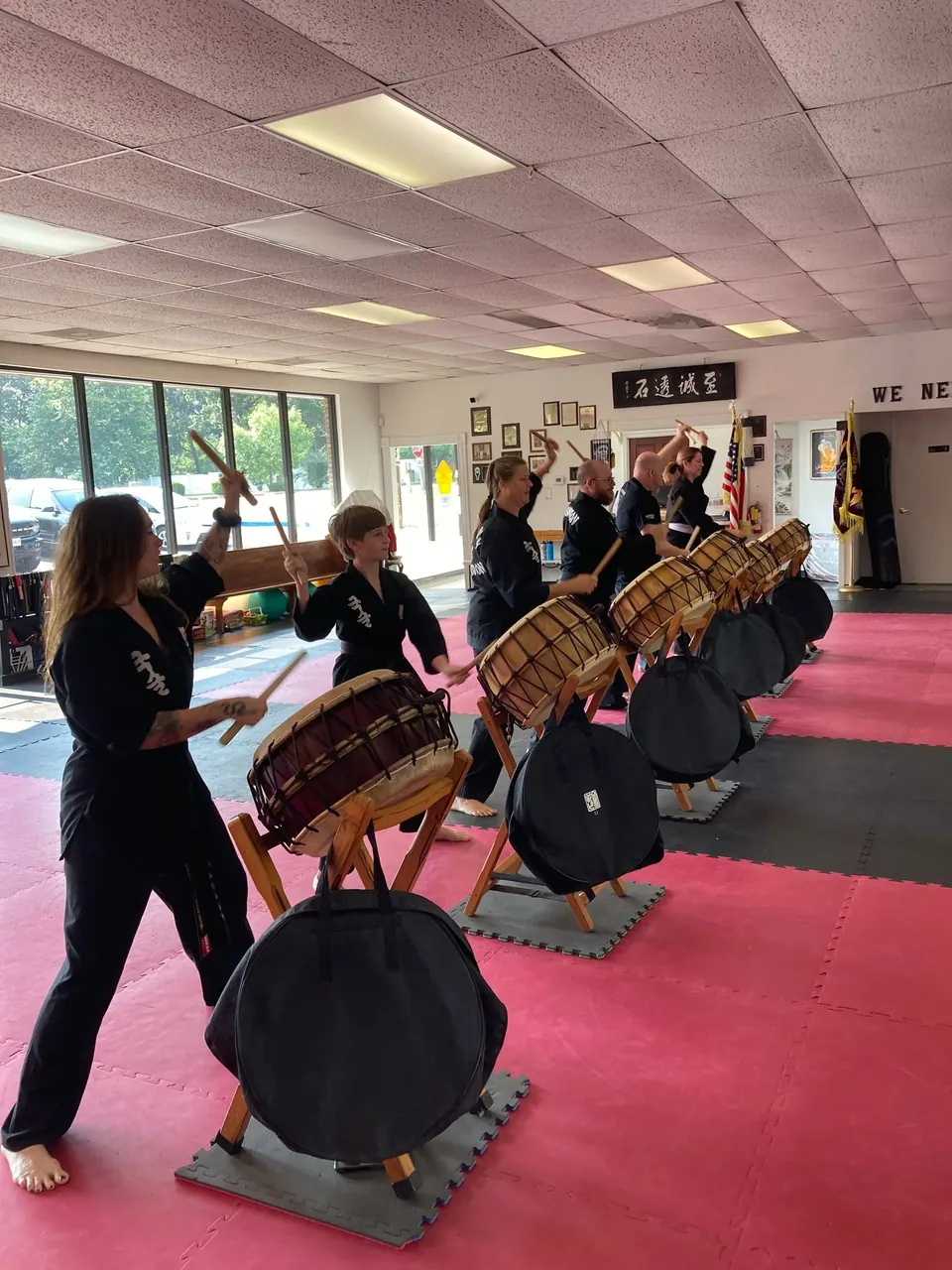
We're the only martial arts school in St. Peters, and one of very few in Missouri, that integrates authentic Korean Samulnori drumming into our program. This isn't a quirky add-on. It's a deliberate, pedagogically sound choice that produces measurable improvements in martial arts performance — and a cultural experience that students carry with them for life.
What Is Korean Samulnori Drumming?
Samulnori (사물놀이) is a form of Korean percussion music that uses four traditional instruments: the buk (barrel drum), janggu (hourglass drum), kkwaenggwari (small gong), and jing (large gong). It originated from Korean shamanic music traditions and has been practiced for centuries.
The rhythmic patterns of Samulnori are complex, intricate, and deeply connected to Korean cultural and martial arts history. Learning them requires genuine focus, timing, and physical coordination — the exact same capacities that define excellent martial arts performance.
The Performance Benefits for Martial Arts
Timing
Martial arts is fundamentally about timing. A perfectly executed technique at the wrong moment is useless; a technically imperfect response at precisely the right moment can be highly effective. Drumming training isolates and develops timing in a way that forms and sparring cannot fully replicate — because the feedback is immediate and audible. You hear when you're off. You hear when you're on.
Bilateral coordination
Traditional Korean drumming requires both hands and sometimes feet working independently while maintaining a unified rhythmic structure. This bilateral coordination — each side of the body doing different things in service of the same goal — directly transfers to the complex coordination demands of Kuk Sool Won techniques.
Focus under stimulus
Drumming in a group requires maintaining your own part while listening to others and responding to the ensemble. This is a high-level attentional demand — and it's one that children with focus challenges often find surprisingly accessible, because the auditory feedback is more immediate than the proprioceptive feedback of physical technique.
Why It's Unique to KSW STL
We've been asked why other martial arts schools don't offer this. The honest answer: it requires specialized knowledge, investment in equipment, and instructors who are genuinely trained in the tradition — not just shown a few patterns on YouTube. We've invested in all three.
Finding authentic Korean drumming instruction in the St. Charles County area outside of our program is genuinely difficult. Families drive from O'Fallon, Cottleville, and St. Charles specifically for this program.
The Cultural Dimension
Martial arts in isolation teaches physical skills and some cultural context. Martial arts combined with traditional Korean drumming creates a genuine cultural immersion — a sense of connection to a tradition that goes back centuries.
For children who train in both, the sense of being part of something larger than just exercise or competition is real. They're participants in a living cultural tradition. That sense of meaning and identity is its own kind of developmental gift.

This guide is written by instructors who have taught thousands of children and families in St. Peters, MO since 1995. We believe in sharing honest, experienced-based guidance — not marketing copy.